

When booking taxis Ipswich groups can share this December, confirm passenger numbers, bags, accessibility needs and journey times first. Then ask which vehicle arrangement is suitable and available. Give the operator the full journey details, including any separate returns, before treating the booking as confirmed.
The short answer
Choose transport around the people travelling, not just the number of seats. A shared pick-up can simplify departure, but only if everyone can reach it comfortably. Keep one organiser responsible for confirming the details with passengers and the operator.
Choosing taxis Ipswich groups can share
Start with an exact headcount, including children. If some guests have not decided whether they are coming, explain that when you enquire. Ask when the final passenger number is needed and whether a change could affect the vehicle arrangement or price.
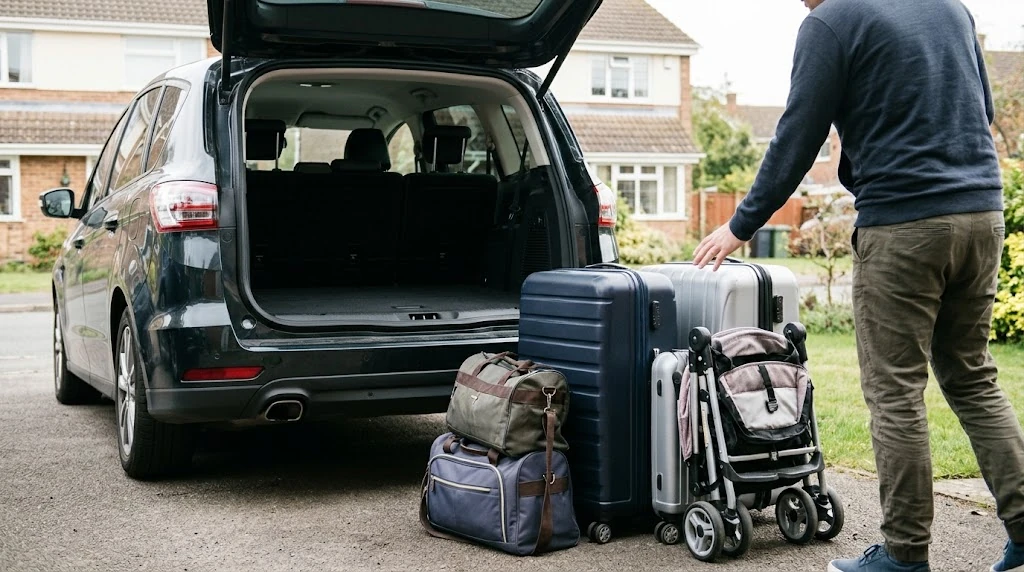
Next, list what needs to travel with the group. For a December meal, that might mean coats and bulky gifts. For an airport transfer, include every suitcase and cabin bag. Pushchairs and mobility aids also need space, even when they fold.
Passenger capacity and usable luggage space are different checks. A vehicle with enough seats may not accommodate everything alongside the passengers. Give approximate dimensions for bulky items rather than describing them as “a few bags”. Use the Vehicle information as a starting point, then ask the operator to confirm suitability for your particular load.
The choice between a minibus and several taxis depends on how your group will travel:
- One minibus: Worth asking about when everyone shares the same departure point and timing. Confirm both seating and storage rather than assuming the whole group will fit.
- Several taxis: May suit people leaving from different addresses or at different times. Decide who travels in each vehicle and give each travelling group its own journey details.
Neither option should be treated as available until the operator confirms it. Keeping everyone together is useful, but not if the arrangement compromises space or access.
If children are travelling, give their ages and ask about child seats before booking. Taxi and minibus rules differ. Check GOV.UK: Child car seat rules for taxis and minibuses, then confirm what restraint arrangements apply to the proposed vehicle, including whether you need to bring a suitable seat.
Confirm accessibility needs before choosing a vehicle
Ask passengers privately what would make the journey manageable. Focus on practical requirements rather than asking for a diagnosis. Someone may need a low step, help with luggage or a shorter walk without describing themselves as disabled.
For a wheelchair user, establish whether they need to remain in their wheelchair during travel or will transfer to a passenger seat. These require different arrangements. Do not assume a standard vehicle or an unspecified minibus will be suitable.
Give the operator the wheelchair’s dimensions and explain whether it folds. If the passenger will transfer, confirm storage requirements for the chair and any other equipment. If they will remain seated, ask whether a suitable vehicle can be provided for that wheelchair and journey.
Check the whole boarding process, not just the seat:
- Reaching the vehicle: How far can the passenger comfortably walk, and is the route step-free?
- Getting in and out: Are vehicle steps manageable, and what assistance is needed?
- Allowing enough time: Does the passenger need extra boarding time or help arranging their belongings?
Assistance dogs are not an optional pet request. Taxi and minicab drivers generally have a legal duty to carry them without an extra charge, unless a valid medical exemption applies. See GOV.UK: Taxi and minicab travel for disabled passengers for guidance on passenger rights and driver duties.
Before booking, get confirmation of the suitable vehicle and agreed assistance arrangements. An enquiry about accessibility is not confirmation that an accessible vehicle is available.
Agree pick-up points everyone can find
A shared meeting point can make departure easier to organise and reduce the number of stops. Individual collections may be more practical when passengers have luggage, limited mobility or children to get ready. For group taxi bookings across Ipswich and Suffolk, weigh fewer stops against the extra walking or separate journey a shared point creates.
Give an exact address, the entrance to use and a clear meeting point. “Outside the venue” leaves room for confusion if there is a main entrance, a side door and a separate car park. Describe where passengers will wait, not just the building they are visiting.
Ask the operator to confirm a safe, lawful stopping place. A convenient doorway may not be somewhere a vehicle can wait. Check with the venue about barriers, access codes and collection restrictions, then pass those details on before the journey.
Choose one organiser and supply a mobile number that will be reachable on the day. That person should share the agreed collection details with everyone travelling. If the organiser will not be at the pick-up, nominate a passenger who can answer the driver’s call.
Keep these timings distinct:
- Passenger-ready time: When everyone will be at the agreed point with their belongings, ready to board.
- Required arrival time: When the group needs to reach the destination, allowing for the walk from the drop-off to the entrance.
Ask the operator what journey allowance is realistic for your December date and time rather than guessing from a familiar drive.
For business organisers, confirm account arrangements separately from transport availability. Use Business account enquiries to discuss payment and invoicing requirements before assuming the journey can be charged to an account.
Plan separate returns and check what the quote covers
Plan each return as a separate journey. The people travelling home may not be the same group who arrived together. Some may leave early, stay longer or travel to a different address. Agree those arrangements before asking for a quote.
Split passengers into departure groups based on when they want to leave. For a December work meal, that could mean an earlier return for guests with childcare commitments and a later departure for colleagues staying until the end. Give each group a named passenger contact.
For every return, confirm the passenger count, collection time, destination and proposed vehicle arrangement. Do not assume the outward vehicle will wait nearby or automatically come back. If several vehicles are needed, make sure each passenger knows which return they are joining.
A fixed return time gives everyone a clear departure plan, but the group needs to be ready. Requesting transport when the gathering finishes offers flexibility, but that later request remains subject to availability. Decide whether an uncertain departure would be manageable for your passengers.
For airport transfers, provide the flight number, travel date and scheduled arrival or departure time. Confirm luggage requirements for each direction, particularly if passengers will return with additional bags. Ask how the collection timing will be agreed.
Use the Fare information as a starting point, then check the scope of your quote:
- Included journeys: Does it cover every collection, stop and separate return?
- Possible changes: What charges apply to waiting, extra stops or an altered route?
- Payment: Which methods are accepted, when is payment due and who will pay?
Keep the agreed journey breakdown with the price. This makes it easier to check that the quote matches your plans before accepting it.
Know what to do when December plans change
Contact the operator promptly if the headcount changes, someone adds bulky bags or a passenger identifies a new access requirement. These changes can affect vehicle suitability, even when the route and departure time stay the same.
A later venue finish or a different collection entrance also needs checking. Use the contact route provided with your booking. If you need to find contact details, Contact the operator about changes, but do not assume a message has been seen or accepted simply because you have sent it.
Give your booking reference and state exactly what needs amending. For example: “The return collection needs to move from the main entrance to the side entrance at the same address. The passenger count is unchanged.” Clear details reduce the risk of changing the wrong journey.
Ask whether the amendment requires a different vehicle arrangement. Then reconfirm availability, any revised fare and the effect on separate returns. Moving one departure does not necessarily change the others, so identify precisely which journeys should remain as booked.
Check the cancellation, waiting and missed-pick-up terms before deciding what to do. Ask how these apply if your event runs late or some passengers no longer need transport. Do not assume an unused journey can be cancelled without a charge.
An amendment request is not acceptance. Wait for confirmation, then share the updated details with every affected passenger. Replace the old plan in your group message so nobody follows an outdated collection time or location.
Send your journey details for an availability check

When arranging taxis Ipswich groups can share this December, send one complete journey enquiry before booking. This gives the operator the information needed to check availability and assess a suitable vehicle arrangement, rather than quoting for an incomplete plan.
Use this checklist to prepare your request:
- Date and timing: Give the travel date, required outward arrival time and proposed collection time for each separate return. Flag anything still undecided.
- Route: Include collection addresses, intermediate stops and destinations for every journey, not just the main venue.
- Passengers: State the number travelling on each outward and return journey, including children.
- Space: List luggage, pushchairs and mobility equipment. Include dimensions for bulky items where these will help assess storage.
- Access: Explain boarding and assistance requirements, including whether anyone needs to remain in a wheelchair during travel.
- Contact: Name the organiser and provide a mobile number that will be reachable during the journeys.
For minibus bookings in Ipswich, request confirmation that the proposed vehicle suits your passengers and equipment. For December taxi bookings in Suffolk, ask about availability for every requested departure, including later returns.
Send your journey details for those checks before committing to the transport plan. Wait for confirmed vehicle arrangements, the agreed price and a clear booking status before telling passengers their journeys are booked.
Frequently asked questions
Can someone bring a pet on a group journey?
Ask before booking whether the proposed vehicle can accommodate a pet. Give the animal’s type and size, and explain whether it will travel in a carrier. Check any conditions or charges rather than assuming acceptance. Keep this enquiry separate from assistance dog arrangements, which are covered by different duties.
What should I do if someone leaves an item in the vehicle?
Use the website’s Lost Property page to find the appropriate reporting route. Have the booking reference, journey date, collection time and a clear description of the item ready. Include where the passenger was sitting if known. Ask how any recovered item can be collected, without assuming delivery is available.
Can I get a receipt for a shared journey claimed through work?
Ask about receipts before payment and check what information your employer needs. This may include the journey date, route, amount paid and business name. If several passengers intend to claim separately, ask whether separate receipts or payments can be arranged. Do not assume a group fare can automatically be split.
Can passengers eat or drink during the journey?
Check the operator’s policy before bringing food or drinks into the vehicle, particularly after a December meal or party. Ask whether sealed containers are required and whether alcohol is permitted. Confirm any cleaning terms too. Share the answer with passengers beforehand so nobody arrives expecting something the operator has not agreed to.